
Deck & Fence Staining
Protect & Beautify Your Outdoor Spaces with Professional Staining
Our deck and fence staining services combine beauty and durability in one. Whether you’re refreshing a faded finish or starting from scratch, we use premium stains that protect against weather, wear, and time — keeping your outdoor spaces looking their best. Scroll down to see the results — or request your free quote today.
Our Work
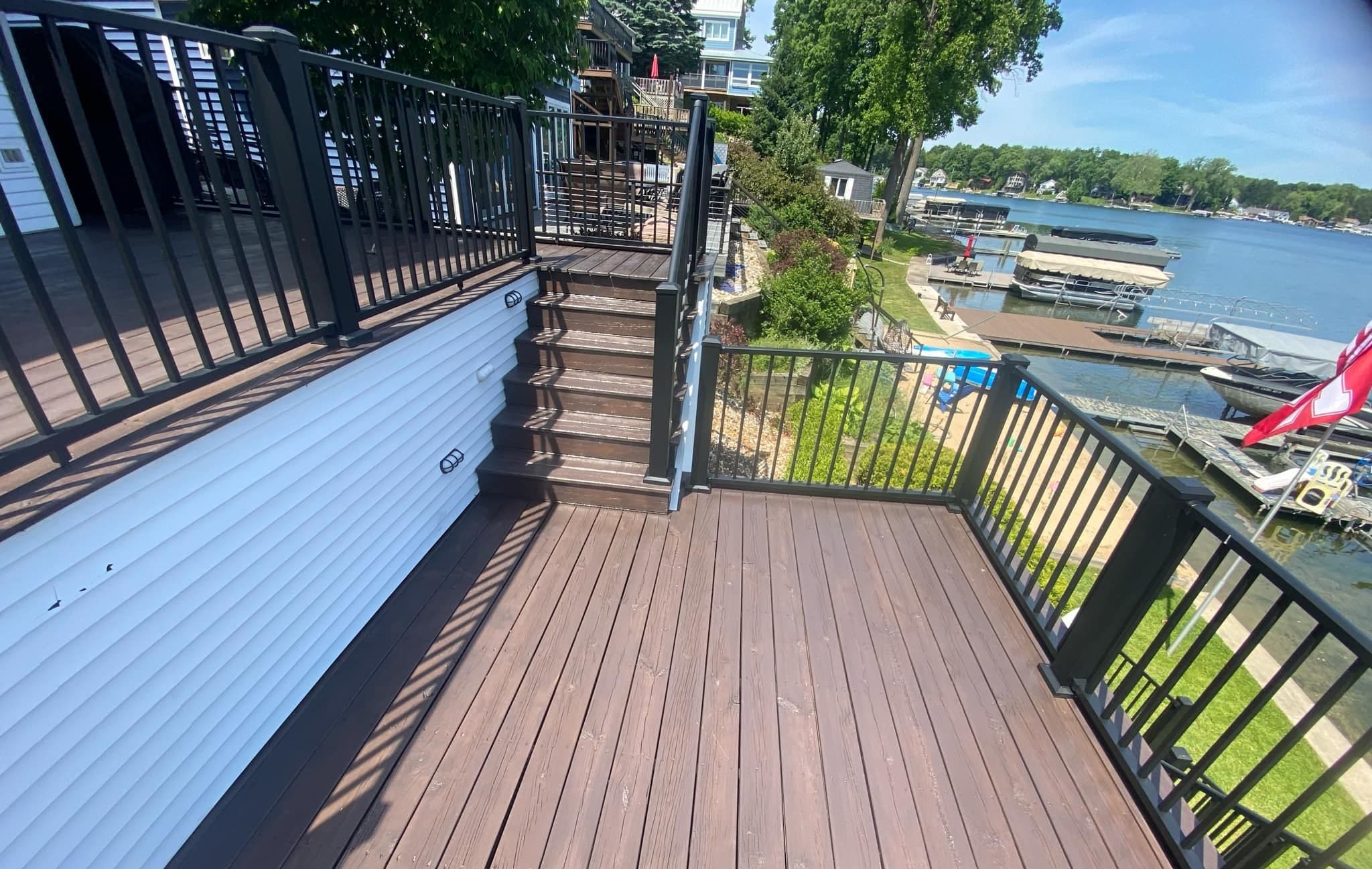
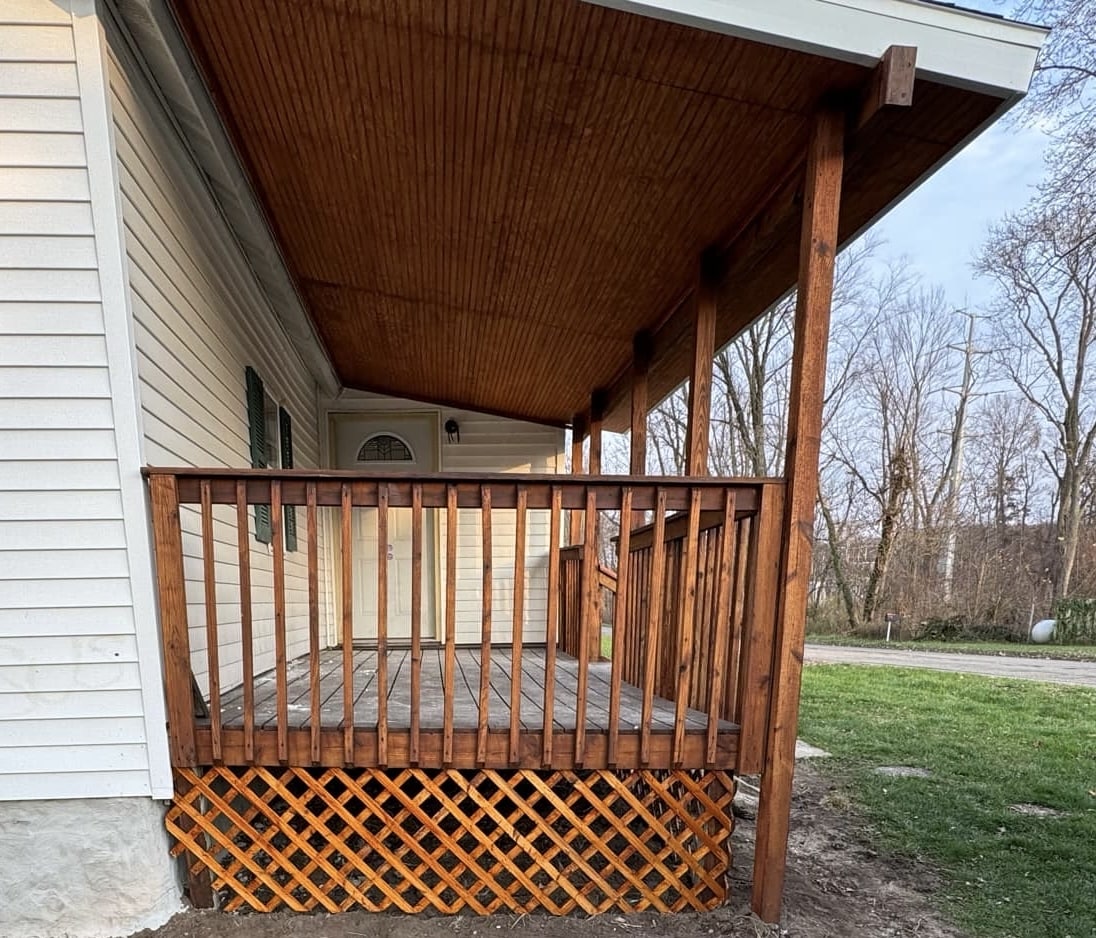
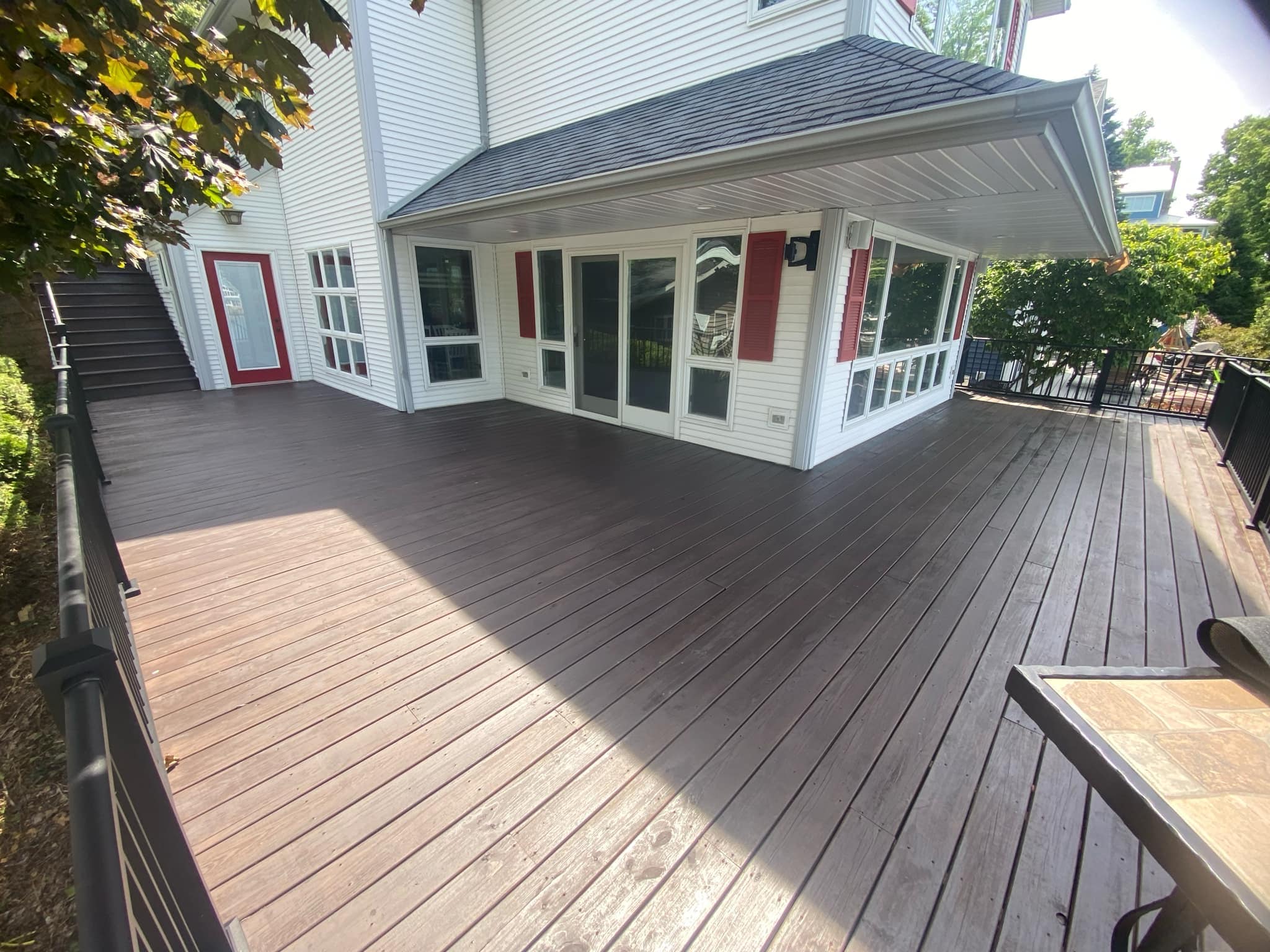


What We Stain & Restore
- Decks – Ground-level decks, elevated decks, multi-level decks, deck stairs, railings, balusters, and deck boards. We work with all deck configurations and sizes.
- Fences – Privacy fences, picket fences, split-rail fences, shadowbox fences, horizontal board fences, and decorative fencing. We handle both sides or just the visible side based on your needs.
- Pergolas & Arbors – Freestanding pergolas, attached pergolas, garden arbors, and decorative overhead structures.
- Gazebos & Pavilions – Standalone gazebos, screened structures, and outdoor pavilions.
- Other Wood Structures – Exterior wood trim, wood siding, shed exteriors, playsets, and outdoor furniture (case-by-case basis).
Wood Types We Work With
- Pressure-Treated Pine: Most common deck/fence material, stains well
- Cedar: Naturally rot-resistant, beautiful grain, excellent for staining
- Redwood: Premium wood, ages beautifully with proper staining
- Composite/PVC: Cannot be stained (paint only)
- Hardwoods (Ipe, Mahogany): Exotic woods requiring special products
Stain vs. Paint vs. Sealant
Choosing the Right Protection for Your Wood
| Stain Type | What It Is | Best For | Pros | Cons |
|---|---|---|---|---|
| Solid Stain (Paint-Like Coverage) | Opaque finish that completely hides wood grain; looks like paint but penetrates wood better. |
|
Best durability (3–5 years), hides imperfections, widest color range | Hides wood grain, requires more maintenance when it fails, harder to switch back to transparent stains |
| Semi-Transparent Stain | Shows wood grain and texture while adding color and protection. |
|
Shows wood character, easier to maintain, more forgiving than transparent | Less UV protection than solid, moderate durability (2–3 years) |
| Semi-Solid Stain | Between semi-transparent and solid — more color than semi-transparent, some grain shows through. |
|
Good balance of coverage and grain visibility, decent durability (3–4 years) | Less common, harder to find exact color match for repairs |
| Transparent / Clear Sealant | No color added, just protection. Shows all wood grain and natural color. |
|
Natural appearance, easy application, low commitment | Minimal UV protection (1–2 years), wood will gray naturally, needs frequent reapplication |
Our Recommendation
Most Michiana homeowners choose semi-transparent for new decks and semi-solid or solid for older decks. We’ll evaluate your wood and recommend the best option during your estimate.
Can’t Switch Easily
Once you go solid stain, it’s difficult to go back to transparent without stripping all the old stain. Start transparent/semi-transparent if you’re unsure.
Our Deck & Fence Preparation Process
How We Prepare Your Wood
Stain only works on clean, bare wood. Preparation is 70% of the job.
- Inspection & Assessment – We check for loose boards, protruding nails, rot, insect damage, and structural issues. We identify areas needing repair and discuss with you before proceeding.
- Deep Cleaning:
-
- Power Washing: We use appropriate pressure (1200-1500 PSI for softwoods, higher for hardwoods) to remove dirt, mildew, old stain, and gray weathered wood fibers. Too much pressure damages wood; too little doesn’t clean properly.
- Deck Cleaning Solution: For heavy buildup, we apply professional deck cleaner before power washing. This breaks down mildew, algae, and embedded dirt.
- Wood Brightening (When Needed) – After cleaning, pressure-treated wood often has a tannin stain (brown/orange discoloration). We apply wood brightener to neutralize tannins and restore natural wood color. This step is crucial for even stain absorption.
- Drying Time – Wood must be completely dry before staining. We wait at least 24 hours after washing, longer if it rains or conditions are humid. If there’s any concern about moisture levels, we use a moisture meter to verify the wood is ready for stain.
- Sanding – Rough spots, splinters, and raised grain get sanded smooth. Handrails and high-touch areas always get sanded for safety and comfort.
- Final Prep – We protect landscaping, siding, concrete, and any surfaces not being stained. We sweep away all debris and ensure a clean surface.
Why This Matters
Stain applied to dirty, wet, or unprepared wood will peel within months. Proper prep ensures your stain lasts 3-5+ years instead of 1-2 years.
Professional-Grade Stain Products We Use
We use products designed for Michiana’s climate – hot humid summers, freezing winters, and everything in between.
Oil-Based vs. Water-Based
Oil-Based Stains:
- Pros: Deep penetration, rich color, excellent water repellency
- Cons: Longer dry time, strong odor, VOC regulations in some areas, harder cleanup
Water-Based Stains:
- Pros: Fast dry time, low odor, easy cleanup, environmentally friendly
- Cons: Less penetration, may require more coats, slightly less durable
Our Standard Recommendation
Oil-based for decks (better wear resistance), water-based acceptable for fences. We’ll recommend based on your specific situation.
Color Selection
Natural Tones (Most Popular):
- Cedar tone (warm reddish-brown)
- Redwood (rich red-brown)
- Natural oak (light warm brown)
- Driftwood gray (modern, trending)
Darker Tones:
- Walnut/Espresso (rich dark brown)
- Mission brown (traditional dark)
Weathered/Gray Tones:
- Cape Cod gray (coastal look)
- Weathered wood (intentional gray)
Test on an inconspicuous spot first – stain looks different on different wood types.
Weather & Timing Consideration – When to Stain in Michiana
Weather controls everything with outdoor staining. Here’s what you need to know:
Ideal Conditions
We understand the ideal conditions for outdoor staining and plan every project accordingly. Temperature, humidity, and precipitation all affect how stain penetrates and cures, so we monitor forecasts carefully and schedule work during optimal weather windows.
We know when conditions aren’t right and won’t start a project that’s set up to fail. We also select stain products that work best for the specific conditions and your surface. Fresh stain needs proper dry time to cure—we ensure adequate weather protection before and after application.
Our experience means we know what to look for and how to time the work for lasting results. We won’t compromise your project by rushing or working in poor conditions.
Best Seasons in Michiana
- Late Spring (May-June): Good conditions once weather stabilizes. Watch for late spring rains. Wood has dried out from winter moisture.
- Summer (July-August): Prime staining season. Warm, stable weather. Book early – this is our busiest time. Avoid hottest days (90°F+).
- Early Fall (September-October): Ideal staining weather. Lower humidity, comfortable temperatures, stable weather patterns. Often our best window.
- Late Fall/Winter/Early Spring: Not recommended. Too cold for proper stain penetration and curing. Wood often too wet from rain/snow.
New Wood Waiting Period
- Pressure-Treated Wood: Wait 3-6 months before staining. New treated wood is wet and won’t accept stain properly. Let it weather and dry.
- Cedar/Redwood: Can stain immediately or wait 3-4 months to let natural oils stabilize.
Project Timeline Estimates
- Small deck (200-300 sq ft): 2-3 days (1 day prep, 1 day drying, 1 day staining)
- Average deck (300-500 sq ft): 3-4 days
- Large deck (500+ sq ft): 4-6 days
- Standard fence (100 linear feet): 2-3 days
- Large fence (200+ linear feet): 4-6 days
Weather delays are common. We build flexibility into schedules.
How We Apply Your Stain
Deck Staining
- Vertical Surfaces First – We stain railings, balusters, and stairs before deck boards. This prevents drips on freshly stained horizontal surfaces.
- Deck Boards”
-
- Spraying: Fastest method for large decks. We spray with the grain.
- Back-Brushing: Immediately after spraying, we brush to work stain into wood and eliminate puddles.
- Brush/Roller: For smaller decks or areas where overspray is a concern.
- Even Application – We work board by board, maintaining a wet edge to prevent lap marks. We never stop mid-board.
- Wipe Excess – Horizontal surfaces can’t have puddles or excess stain – they won’t dry properly and get sticky. We wipe as we go.
Fence Staining
- Spray Application: Most efficient for fences. We spray both sides (if requested) or just visible side. Heavy masking protects landscaping and adjacent surfaces.
- Brush Application: For shorter fences, decorative fences, or when overspray isn’t acceptable.
- Roll Application: For very large, flat panel fences.
Number of Coats
- Semi-transparent/Transparent: Usually one coat (wood can only absorb so much)
- Semi-solid: Often one coat, sometimes two for coverage
- Solid stain: Two coats like paint, first coat base, second coat full coverage
Drying Time
- Foot traffic: 24-48 hours minimum
- Full cure: 72 hours before replacing furniture
- No rain exposure: 24-48 hours critical (varies by product)