Exterior Residential Painting
Protect & Beautify Your Home’s Exterior with Expert Painting & Staining
Our exterior painting and staining services give your home the protection and polish it deserves. Using premium paints, stains, and proven techniques, we create durable finishes that stand up to the elements while boosting curb appeal. Scroll down to see our process — or request your free quote and get started today.
Our Work
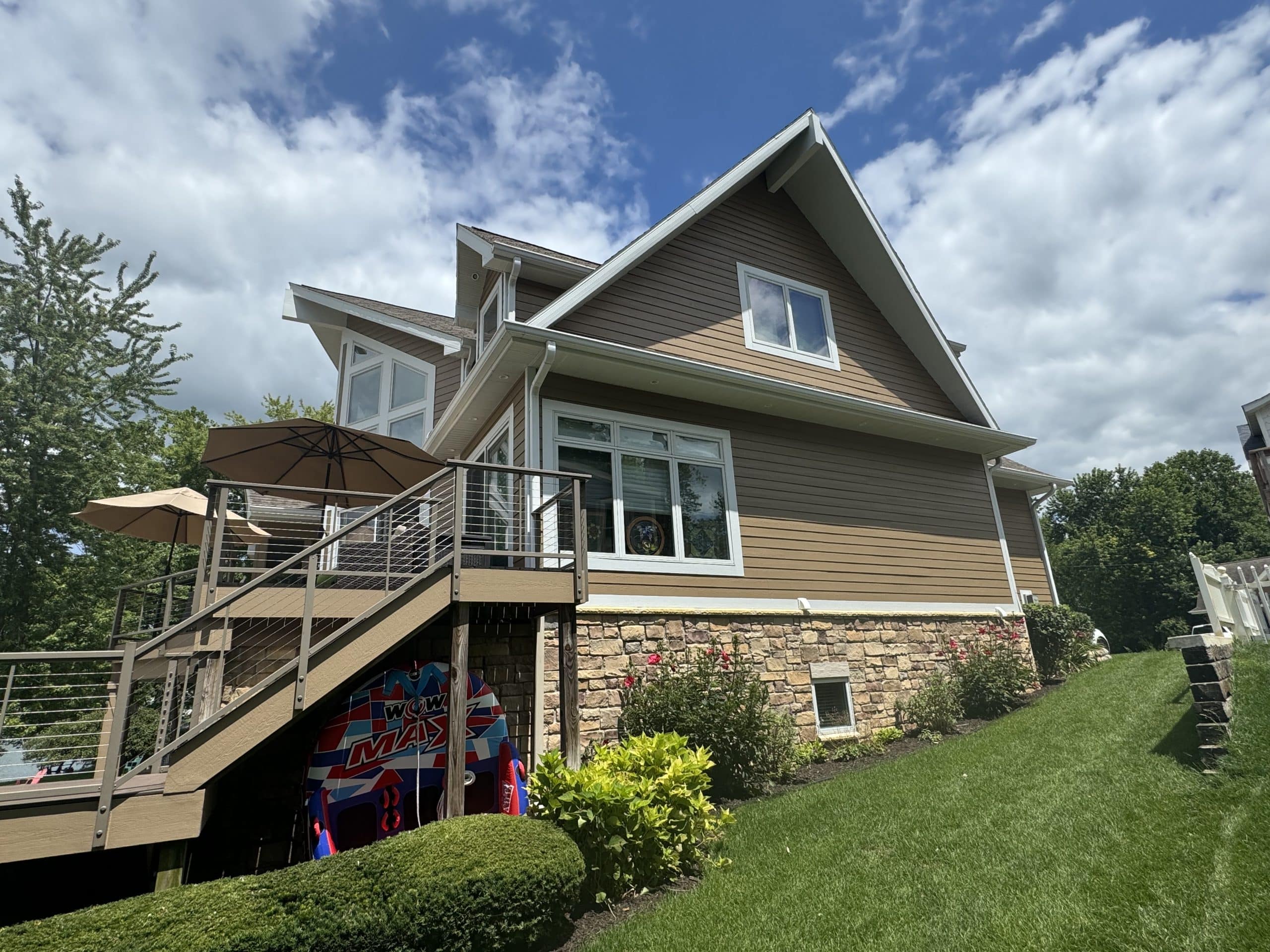
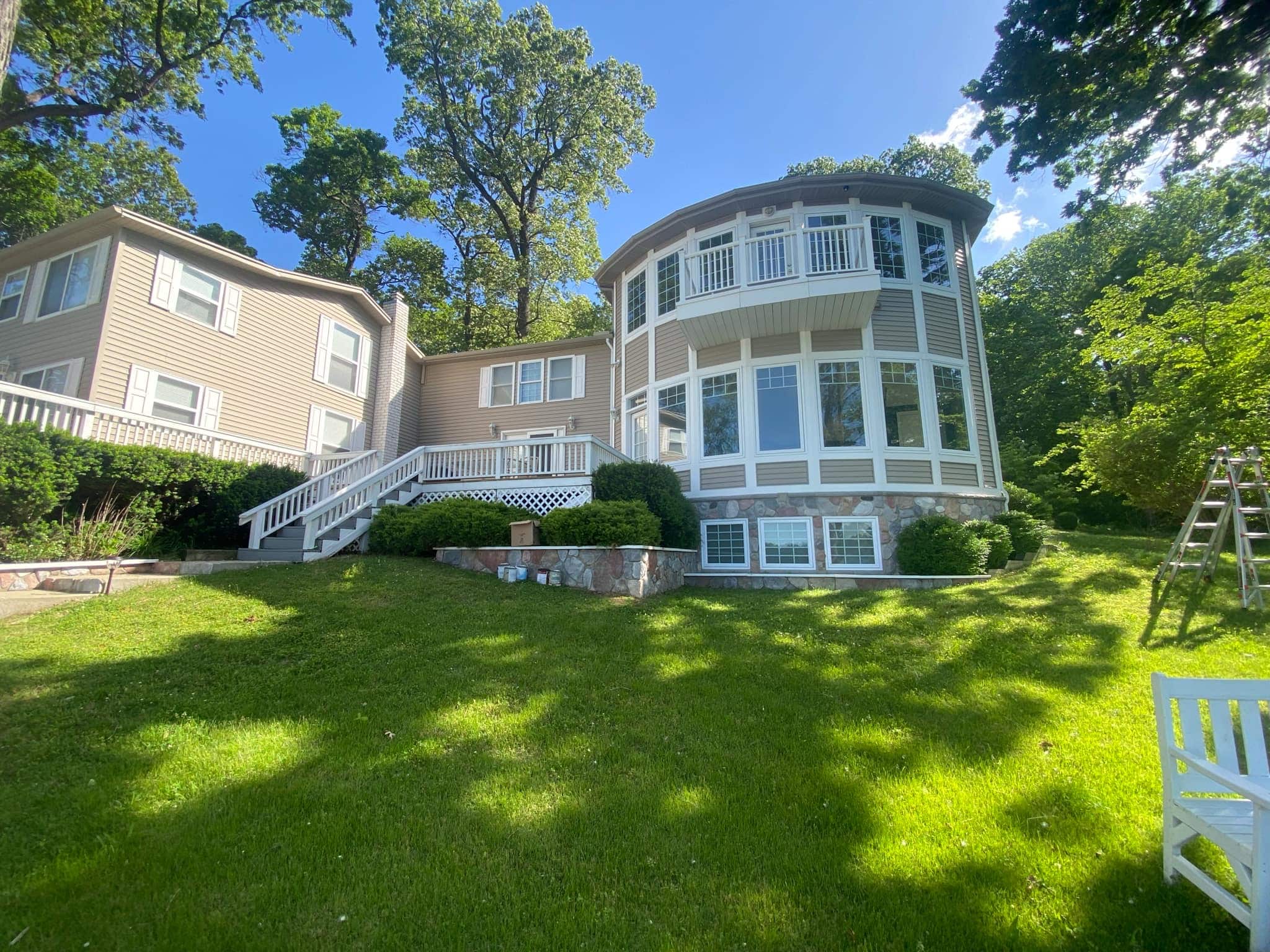
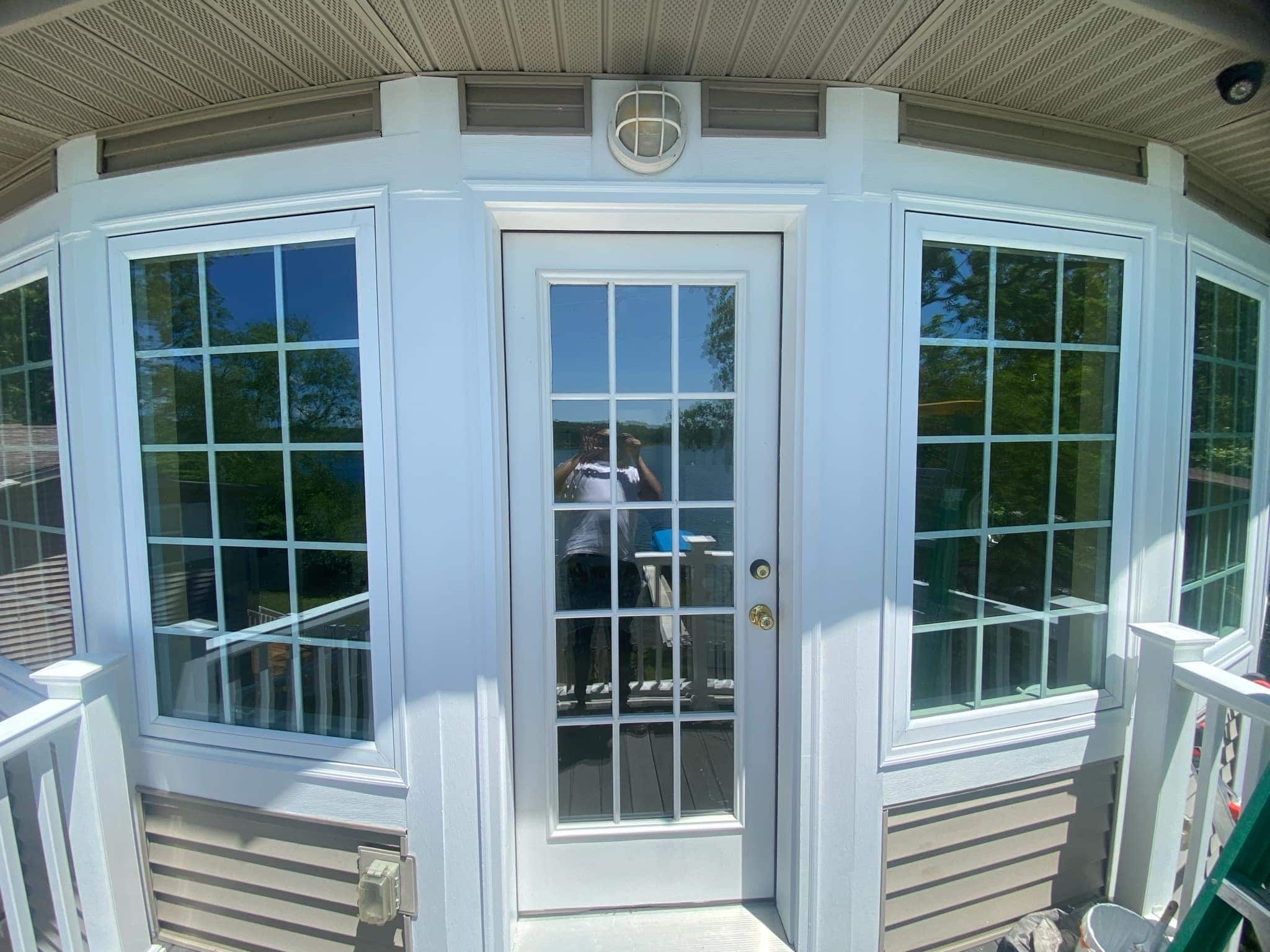


What We Paint on Your Home’s Exterior
We handle all exterior surfaces that need protection from the elements:
- Siding – Wood, vinyl, fiber cement (Hardie board), aluminum, stucco, and T1-11. Each material requires specific prep and products – we know how to handle them all.
- Trim & Accent Details – Window trim, door frames, fascia boards, soffits, corner boards, and decorative moldings. These details make or break your home’s curb appeal.
- Doors & Shutters – Front doors, back doors, garage door trim, and functional or decorative shutters. A fresh door color can transform your home’s appearance.
- Decks, Porches & Railings – Covered porches, deck railings, porch floors, and stairs (for full deck staining, see our dedicated deck service).
- Foundation & Concrete – Foundation walls, concrete block, and masonry surfaces that need a protective coating.
- Other Elements – Garage doors, exterior light fixtures, downspouts, vents, and other painted exterior components.
Our Exterior Painting Preparation Process
Exterior prep is more intensive than interior work. Your home faces rain, sun, wind, and temperature swings. Cutting corners on prep means the paint fails in 2-3 years instead of 7-10.
- Inspection & Assessment – We walk your property and identify problem areas: rotted wood, loose caulking, mildew growth, previous paint failure. We document everything and discuss necessary repairs before starting.
- Power Washing – We thoroughly pressure wash all surfaces to remove dirt, mildew, chalky paint residue, and loose material. This is essential – paint won’t stick to dirty or mildewed surfaces. We use appropriate PSI for each material (too much pressure damages wood and vinyl).
- Scraping & Sanding – We scrape all loose, peeling, or blistered paint back to solid surfaces. Then we sand rough edges and smooth the transitions. This prevents new paint from peeling along old paint lines.
- Wood Repairs – Rotted wood gets replaced or filled with wood hardener and epoxy filler. Loose boards get re-nailed. Split wood gets proper attention. We don’t paint over problems.
- Caulking – We remove old, cracked caulk and apply fresh, paintable exterior-grade caulk to all gaps: between trim and siding, around windows and doors, at corner boards. This seals your home against moisture infiltration.
- Priming – Bare wood gets oil-based primer for maximum protection. Stained areas get stain-blocking primer. Chalky surfaces get bonding primer. We use the right primer for each situation – it’s the foundation of a lasting paint job.
- Surface Protection – We cover landscaping, driveways, decks, and walkways. Windows get masked. Everything not being painted gets protected from overspray and drips.
Choosing the Right Exterior Paint
| Finish Type | Best For | Pros | Cons |
|---|---|---|---|
| Flat / Matte | Older homes with surface imperfections, siding | Hides flaws, traditional look | Harder to clean, can show dirt more |
| Satin | Most siding applications, modern homes | Easy to clean, resists mildew, slight sheen | Can highlight surface imperfections on older homes |
| Semi-Gloss | Trim, doors, shutters, high-moisture areas | Very durable, easy to clean, resists moisture | Shows surface flaws |
| High-Gloss | Front doors, accent features, contemporary looks | Maximum durability and dramatic appearance | Shows every imperfection |
Our Standard Recommendation
Satin for siding, semi-gloss for all trim and doors. This combination provides durability where it’s needed and gives your home a professional, finished look.
Color Considerations
Dark colors absorb heat and can cause paint to fail faster on direct sun exposure. If you love dark colors, we use premium paints formulated to handle heat stress.
HOA restrictions? We’ll help you navigate approved color palettes while finding something you’ll love.
We recommend testing colors on a section of your home before committing – colors look dramatically different on a small chip vs. an entire house.
When to Paint Your Home’s Exterior
Weather controls exterior painting. We don’t just show up and hope for the best—we carefully plan every project around weather conditions.
Our Approach
We monitor forecasts closely and schedule work during optimal weather windows. Different paints perform better in different conditions, so we select products that match the forecast and climate. This means choosing paints that cure properly in the expected temperatures and humidity levels.
We also ensure there’s adequate dry time before any rain. By timing the work strategically and using quality paints suited to the conditions, we protect your investment and deliver a finish that lasts. Weather might control the schedule, but proper planning and paint selection ensure consistent, professional results.
Best Seasons in Michiana
- Late Spring (May-June): Good temperatures, but watch for spring storms. Excellent for prep work.
- Summer (July-August): Prime painting season. Warm, stable weather. Book early – this is our busiest time.
- Early Fall (September-October): Ideal conditions. Lower humidity, comfortable temperatures, stable weather. Often the best time to paint.
- Winter/Late Fall: Not recommended. Cold temperatures and snow prevent proper paint curing, and moisture issues are common.
Weather delays happen. We build flexibility into schedules and keep you updated if conditions aren’t right for painting.
How We Apply Your Paint
Spray, Brush, or Roll? We Use All Three
Different surfaces need different techniques. Here’s how we decide:
- Spraying – Best for large, flat siding areas and hard-to-reach spots. Gives the smoothest finish. Requires extensive masking and protection. We use airless sprayers for even coverage.
- Brushing – Best for trim, detailed areas, and working paint into textured surfaces. Provides maximum adhesion. Takes longer but ensures proper coverage in every groove and gap.
- Rolling – Best for smooth siding, large flat areas, and when overspray is a concern. Good coverage with less prep than spraying.
Our Typical Process
- First Coat: Spray or roll siding. Brush all trim, doors, and detailed areas. This coat seals and protects.
- Inspection: We check coverage and identify any spots needing extra attention.
- Second Coat: Same method as first coat. Two coats are standard – one coat never provides adequate protection or coverage.
- Back-Brushing: On textured surfaces (like rough-sawn cedar), we spray then immediately brush to work paint into all crevices. This ensures complete coverage and adhesion.
Choosing Exterior Paint Colors
Your home’s exterior color affects curb appeal, resale value, and how your house looks in the neighborhood. Here’s our advice:
The Three-Color Rule
- Main color (60-70% of surface): Your siding color
- Secondary color (20-30%): Trim, fascia, soffits
- Accent color (10%): Front door, shutters, details
Consider Your Fixed Elements
If you are not planning on replacing your roof, stone, brick soon, choose paint colors that complement these permanent features.
Test Your Colors
We provide test patches on your actual house. View them at different times of day – colors change dramatically in morning vs. afternoon light.
Popular Michiana Exterior Color Schemes
- Classic White with Black or Navy Trim
- Warm Gray with Bright White Trim
- Soft Blue-Gray with White Trim
- Farmhouse Colors (warm whites, soft grays, sage greens)
- Earth Tones (taupes, warm grays) for wooded neighborhoods
Mistakes to Avoid
- Too many colors (busy and dated)
- Trendy colors (you’ll tire of them quickly)
- Dark colors on south/west-facing walls (heat absorption issues)
- Ignoring neighborhood context (resale value)
When in Doubt
Neutral main colors (grays, taupes, white) with contrasting trim never go out of style and appeal to future buyers.